


.png)



You can tell within a week whether onboarding is working.
Is the new hire asking questions? Shipping small things? Messaging people without overthinking it? Or are they quiet, waiting, trying not to get in the way?
That shift, from “I’m new here” to “I know how to operate here”, is what onboarding is actually for. Not the paperwork, or to get them through the slide deck.
Done well, it gives people just enough clarity and access to start contributing. Done poorly, it drags that ramp-up out for weeks (sometimes months), and you end up blaming the hire instead of the system.
The difference usually comes down to how quickly someone understands two things:
- How work actually gets done
- Who they can go to when they’re stuck
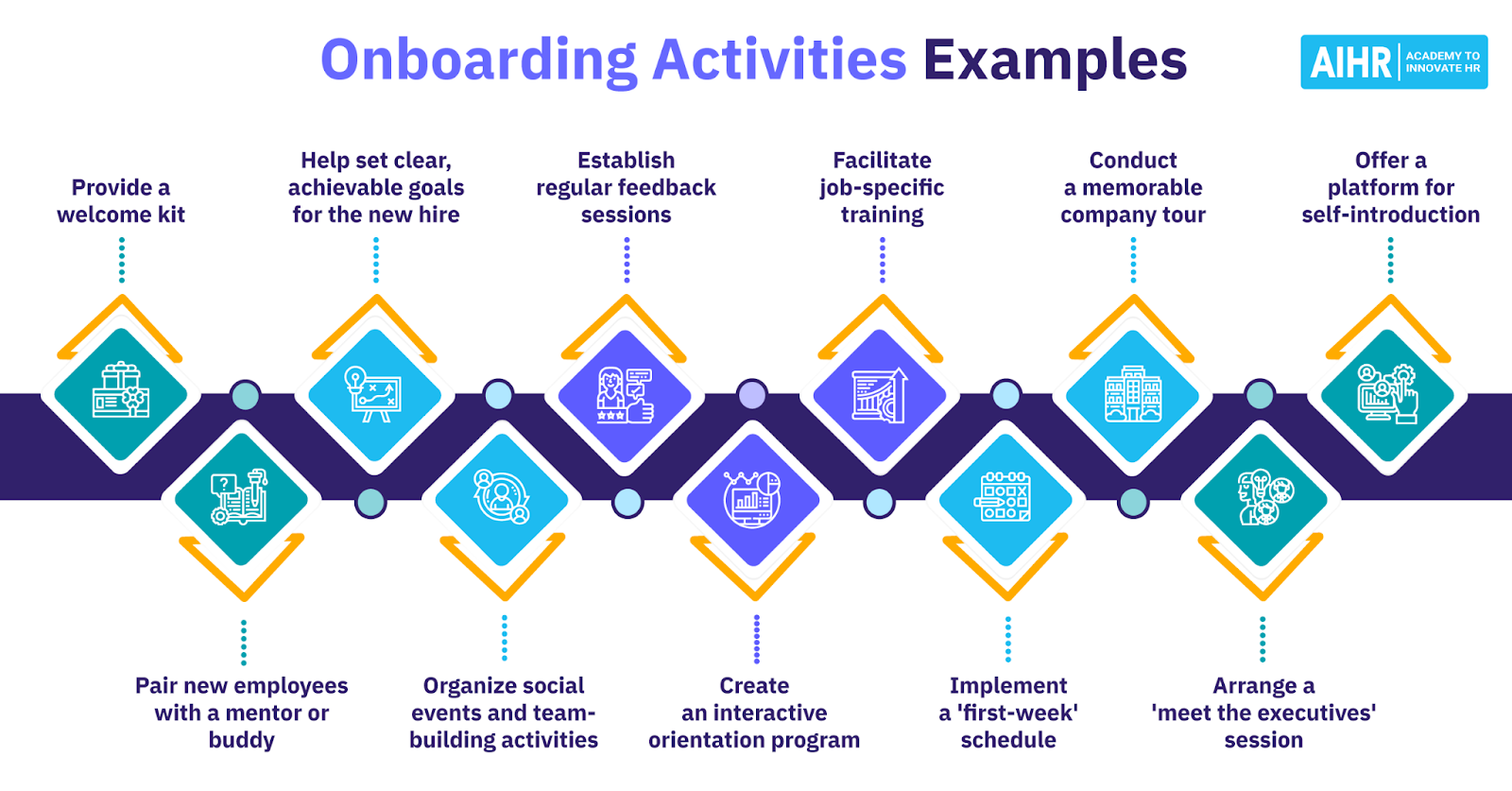
Everything else is secondary. Let’s dive into onboarding activities you can initiate to ensure the two points above become achievable for your new hire.
Understanding the First Day’s Impact
The first day is mostly signal. People are watching more than they’re listening.
Nick Wiese, Regional Vice President at Alpha Heating & Air, oversees teams in a service business where new employees need to get oriented quickly, because confusion on day one tends to show up immediately in the field.
He says, “On the first day, people are not judging your company by what you say in a welcome speech. They are judging it by whether anyone was ready for them. Do they have what they need?
Does someone know they are coming? Can they start learning the real job right away? When those basics are handled well, people settle in much faster. When they are not, the employee starts with doubt instead of confidence.”
Picture this: it’s the first day, and the laptop isn’t ready, logins don’t work, and the manager is “in meetings all day.” The new hire has to spend six hours pretending to be busy. That feeling sticks.
Now picture the opposite. Manager blocks an hour, walks them through what matters, introduces them to 3–4 people who actually work closely with them, and gives them one small task to complete before the day ends.
That one small task does more than any welcome presentation.
Pre-Onboarding Communication
Most teams overthink onboarding and completely ignore what happens before day one.
But that’s where half the anxiety lives.
A vague “see you Monday” email forces people to show up already a little on edge. They don’t know what to expect, what to install, or even what “prepared” means.
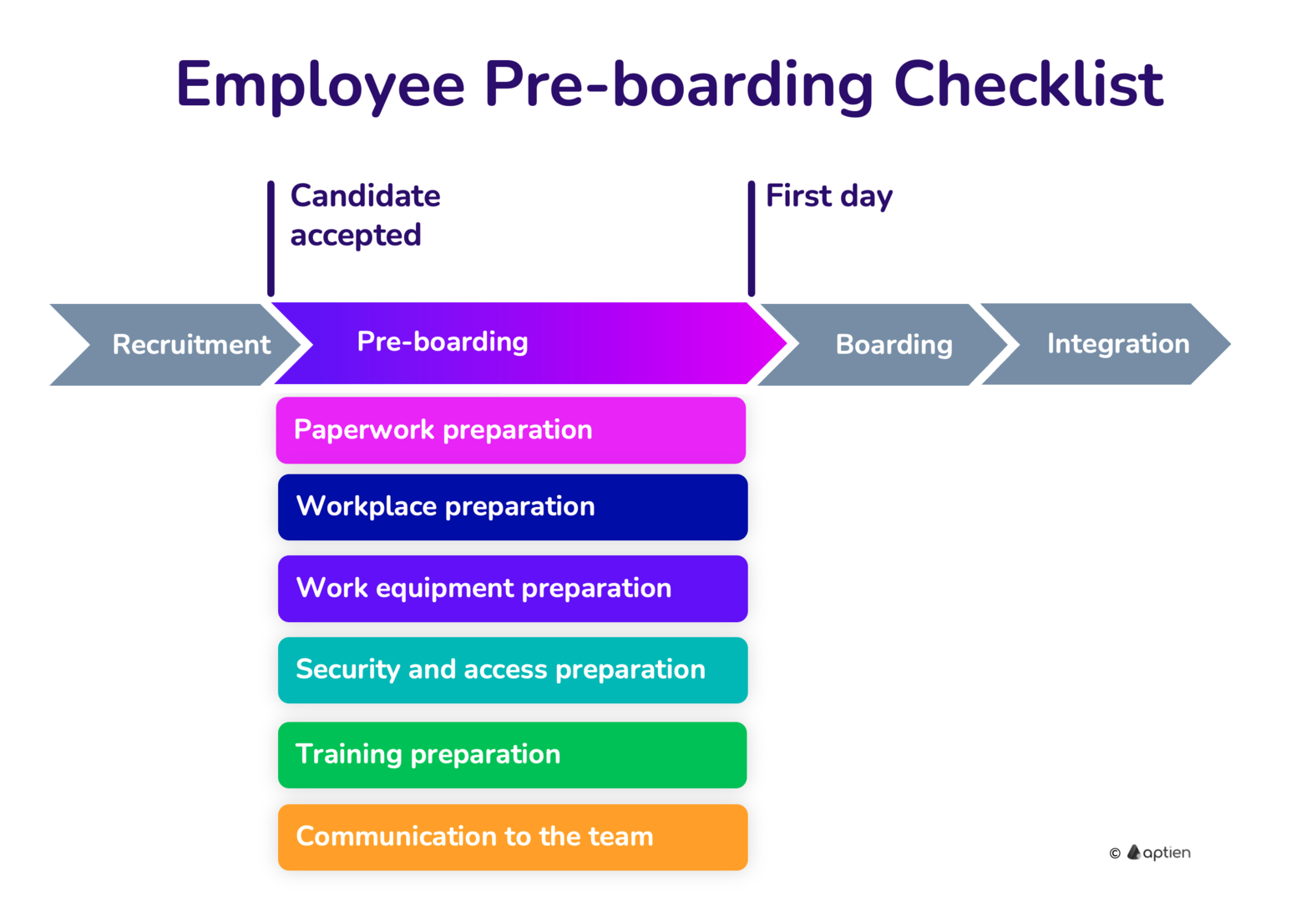
You can fix most of that with one good email. In that email, lay the following out clearly:
- What their first week will roughly look like
- What they should set up beforehand (if anything)
- Who they’ll meet first
- Where to ask questions without feeling awkward
Bryan Henry, President of PeterMD, works in a business where trust, clarity, and a smooth first experience matter from the outset, making early communication especially important when people are trying to understand what comes next.
Henry explains, “A lot of first-week friction comes from uncertainty that could have been handled before day one. People want to know what to expect, what they need to prepare, and who they can turn to when something is unclear.
When that information comes early and straightforwardly, they arrive more focused and less guarded. That changes the tone of the entire onboarding experience.”
If you include a team photo or a short intro video, great. But honestly, clarity beats polish here.
A simple “here’s how your first few days will go” message removes a surprising amount of friction.
Interactive Introductions and Team-Building Activities
Forced fun doesn’t work. Every HR knows this. Everyone’s polite, slightly uncomfortable, waiting for it to end.
What does work is giving people a reason to interact that isn’t artificial.
Adrian Iorga, Founder & President of Stairhopper Movers, leads a business where coordination and trust between team members matter in everyday work, so early rapport affects how smoothly people operate together.
He says, “People do not start feeling like part of a team because they sat through an introduction meeting. It usually happens after one normal, useful interaction. A short conversation, a shared task, a quick problem solved together. That is why the best onboarding activities are usually simple. They lower the social barrier just enough for real working relationships to start forming.”
Small, low-pressure moments work. Not big sessions. Or games that only children would want to play.
Icebreaker sessions
Keep these light and optional-feeling (even if they’re not).
- Two Truths and a Lie works because it’s quick and doesn’t require thinking too hard
- “What’s on your desk?” works because people default to stories
- Workstyle prompts (“I prefer async,” “I over-document,” “I hate meetings before 10”) are actually useful
Skip anything that feels like a workshop. The goal isn’t to convert your employees into best friends, but to set the stage for future rapport. So they can, you know, speak to each other at work without it feeling like an imposition.
Team-building exercises
If you’re going to do something structured, make it collaborative.
- Coffee pairings work well because they’re short and contained
- Small group problem-solving (even something simple) gets people talking naturally
- Quick demos or “show how you do X” sessions are underrated, as people learn and connect at the same time
The moment someone has one normal conversation with a teammate, everything gets easier after that.
Mentor or Buddy Systems
New hires don’t struggle with big things at first. They struggle with tiny, constant uncertainties:
- Is this how we usually do it?
- Who owns this?
- Am I overstepping?
They won’t ask their manager every time. And they shouldn’t have to.
Conrad Wang, Managing Director at EnableU, leads an organization in a care-focused field where new team members often need day-to-day guidance, not just formal training, to feel supported and effective early on.
He notes, “What unsettles most new hires is not one big problem. It is a pile of small questions that they are unsure how to ask. A good buddy system catches those moments early. It gives someone a safe person to check with before confusion turns into withdrawal. That support matters because confidence usually grows through small interactions, not formal sessions.”
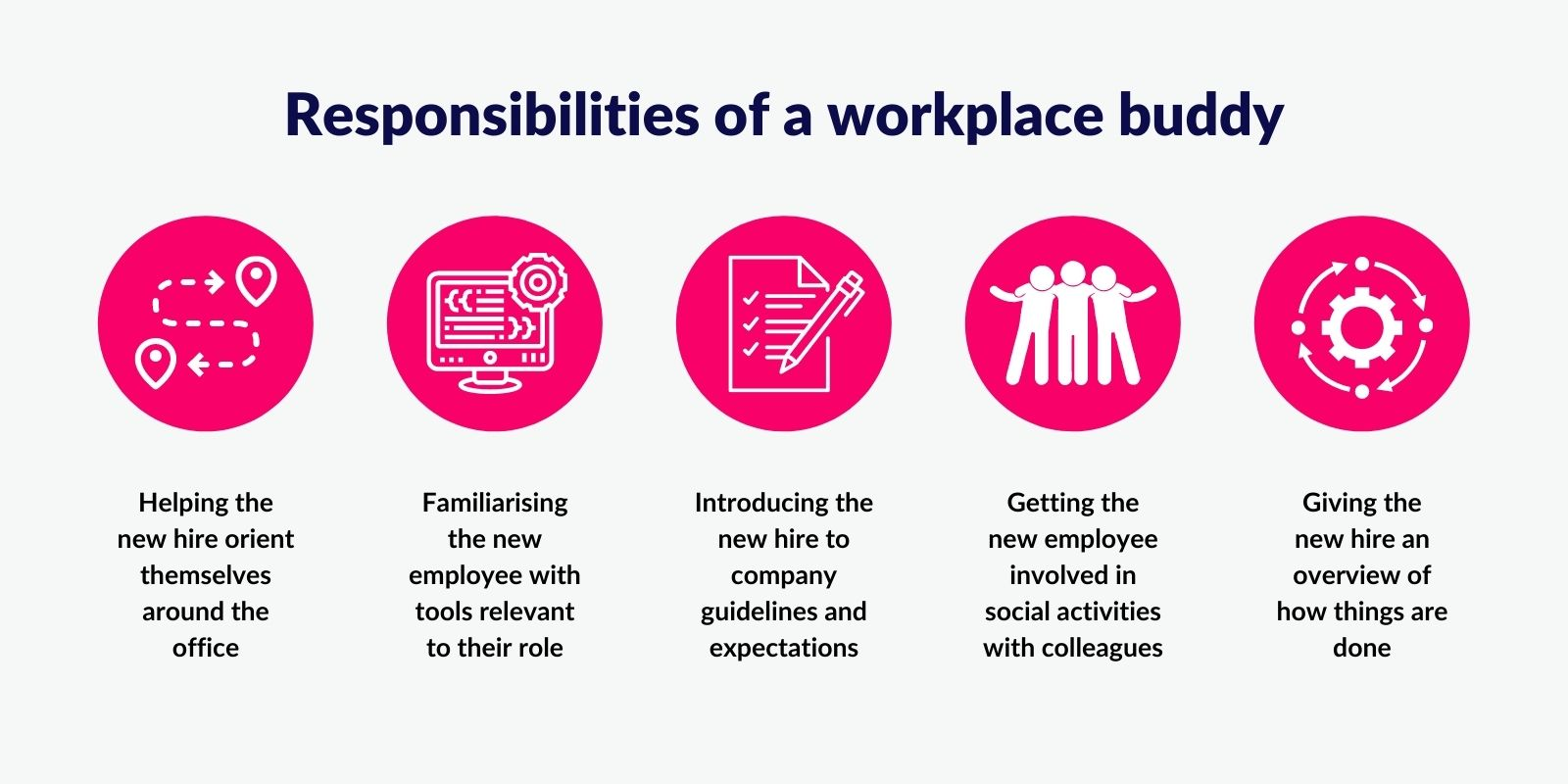
A good buddy fixes that. But only if you pick the right person.
Not the most senior. Not the busiest. Someone responsive, practical, and willing to say, “Yeah, that’s confusing, we usually handle it like this.”
Give the buddy a loose structure, like checking in daily for the first few days, and then tapering off naturally.
Remember, if the buddy system starts feeling like a program, it stops working.
Cultural Immersion Strategies
Most culture sessions don’t land. Slides about values rarely change behavior.
What people remember are specific examples.
The time a project went sideways and how the team handled it, or a tradeoff leadership made (and why).
That’s your company culture, how you deal with problems and navigate work life.
If you want new hires to understand how things work, show them real decisions, not principles.
A few things that actually help:
- Short story-based sessions (“here’s something that went wrong and what we did”)
- Open Q&A with someone who’s been around long enough to be honest
- Pointing out behaviors in real meetings (this matters more than any workshop)
People don’t adopt values, slide deck or not. They mirror what they see.
The Role of Technology in Onboarding
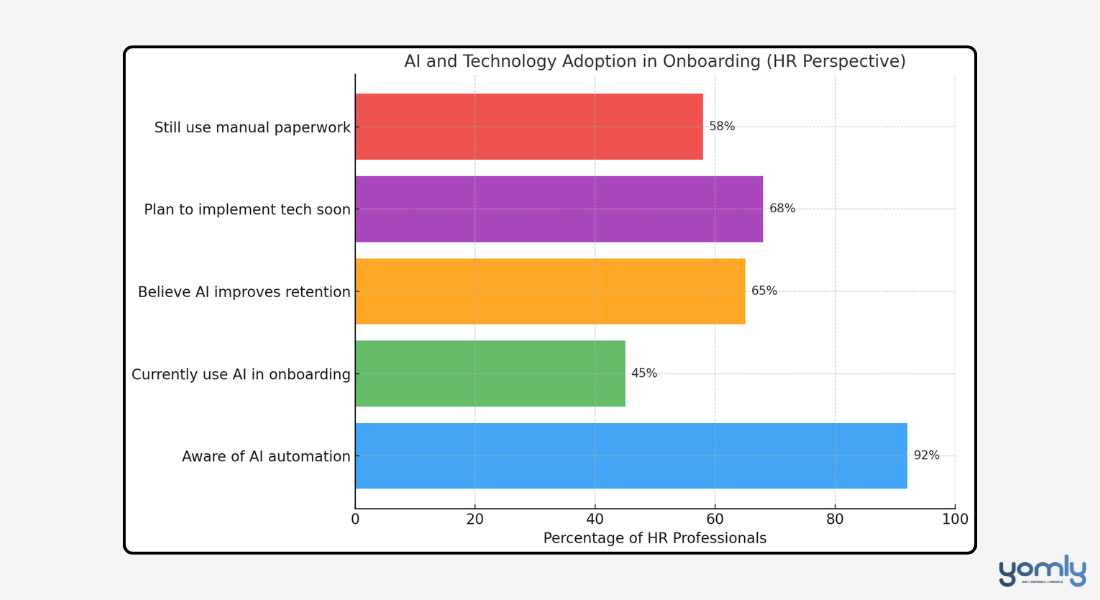
Technology helps. But only if it removes friction. Most teams add tools and accidentally make things worse.
Sixin Zhou, Marketing Manager at LDShop, works in a fast-moving online business where new team members need to get comfortable with tools, workflows, and communication systems quickly in order to contribute without creating avoidable delays.
He notes, “Technology helps onboarding only when it removes hesitation. A new hire should not have to guess where documents live, which channel to use, or who owns a process. If they spend their first week hunting for information, they lose momentum fast. Good onboarding systems make the next step obvious, so people can focus on learning the work instead of decoding the workplace.”
Three things are actually worth getting right:
- A single place to find things: A database people can search without guessing, that they can access remotely.
- Clear setup checklists: Accounts, tools, and access. No ambiguity. No “ask around.”
- Communication that makes sense: Channels that are named properly. Threads that people actually use. Not chaos.
Everything else is optional. Automation is useful for repetitive tasks. But it won’t make someone feel included. That part still needs a human.
Wrapping Up
If onboarding isn’t working, it’s usually because you’re missing clarity. Or access. Or a real point of contact.
Fix those first.
The rest starts to fall into place pretty quickly.
If you want onboarding activities that people actually enjoy (and don’t just sit through), try bringing in structured, low-pressure experiences that feel natural. Confetti makes it easy to run team sessions that get people talking without forcing it.